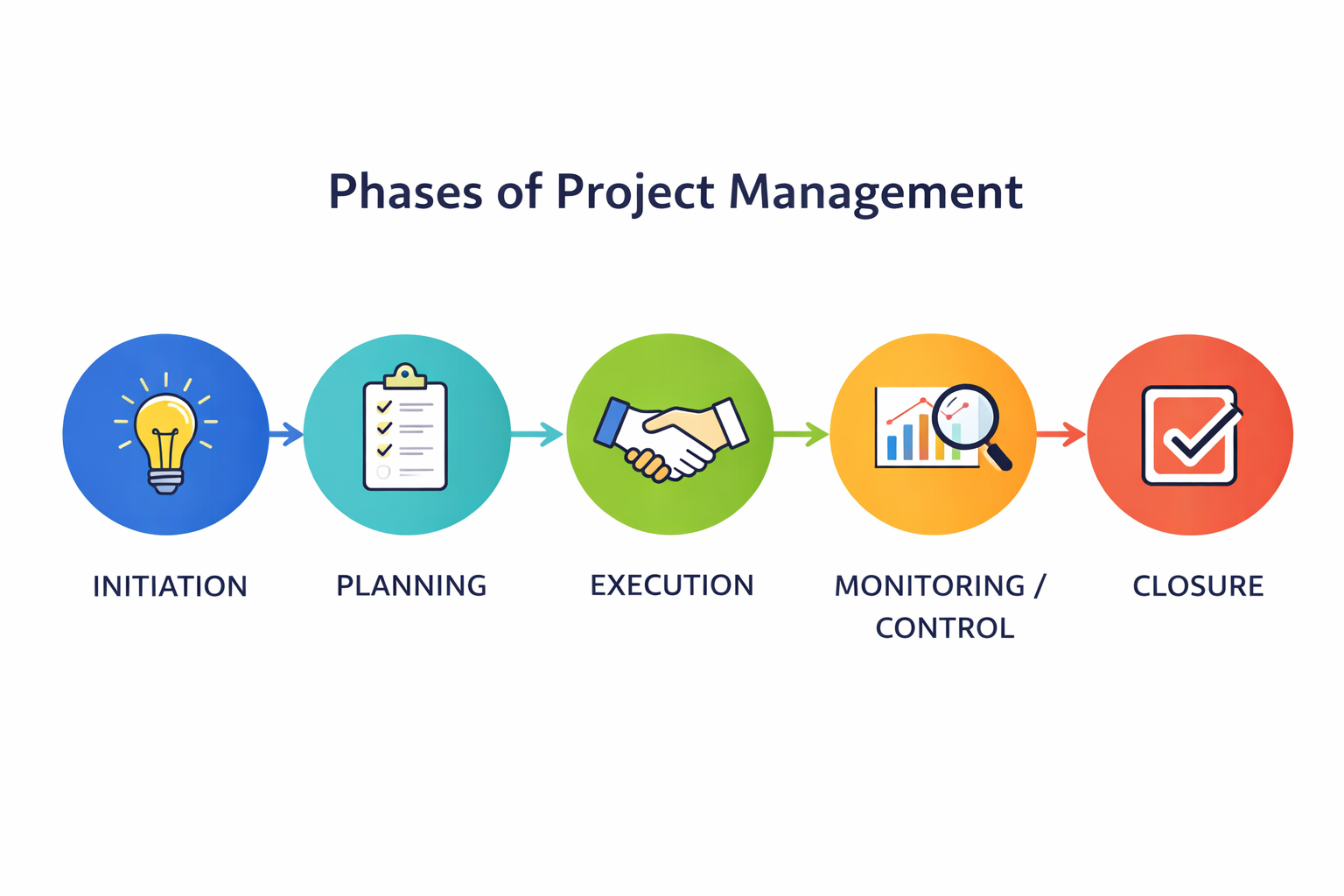
The Five Phases of Project Management
Modern projects live at the intersection of strategy, technology, and people. The classic five-phase project lifecycle gives you a shared language and a repeatable structure so work can move from idea to impact without chaos.
Define why the project exists
From vague idea to clear business case.
Initiation answers the question, “Why are we doing this at all?” You clarify the problem or opportunity, define high-level goals, identify key stakeholders, and confirm whether the work is feasible and worth the investment.
Typical outputs include a business case, a high-level scope statement, initial risks and assumptions, and a named sponsor who owns the outcome.
Key outcome: a go / no-go decision backed by a shared understanding of value.
Design how the work will happen
Turning intent into a realistic roadmap.
Planning translates the vision into a concrete path. You break down deliverables into smaller pieces of work, estimate effort and cost, define timelines, and clarify roles, responsibilities, and decision rights.
This phase often produces the project plan, schedule, budget, communication plan, risk register, and success metrics that will guide execution and governance.
Key outcome: a plan that is achievable, visible to stakeholders, and flexible enough to adapt.
Deliver the work with the team
Coordinating people, tasks, and decisions.
Execution is where the plan becomes reality. The project team performs the work, builds deliverables, and collaborates with stakeholders while the project manager removes roadblocks and keeps everyone aligned.
Communication, coordination, and coaching matter as much as tasks and timelines. The best execution blends structure with enough flexibility to respond to new information.
Key outcome: working deliverables that move the project measurably closer to its goals.
Keep the project on course
Measure, adjust, and protect the value.
Monitoring and controlling runs alongside execution. You track progress against the plan, compare actuals to forecasts, and use data to decide when to change scope, timing, or resources.
This is where risk management, issue management, and change control live. Instead of surprises at the end, you surface variances early and fix them while they are still small.
Key outcome: a project that stays aligned with objectives even as reality shifts.
Finish well and capture the learning
Formal handoff and honest reflection.
Closing is more than “the work is done.” You verify that all deliverables meet acceptance criteria, obtain formal sign-off, and ensure that operations or support teams are ready to own the solution going forward.
You also review what worked, what did not, and why. Lessons learned, documentation, and updated standards turn one project’s experience into reusable knowledge for the next.
Key outcome: a clean finish, documented value, and insights you can apply to future projects.